


St. Louis
Where the last two blog entries merely skimmed the surface of what has now formed a solid foundation for the following chapter, I’ll share a story of the past three months, which, to be honest, have passed remarkably—and almost too quickly. I’ll start with academics: a truly different world compared to Europe, as promised.
As previously mentioned, school life in Indonesia extends deeply into students’ private lives. This is tolerable only at my school, which truly takes its status as one of the best high schools in the country seriously. The workload and academic level are significantly higher, while the time for learning is much shorter. As a result, diligent students often have homework that keeps them occupied until midnight, before rising again at 5 a.m. to start the next school day.
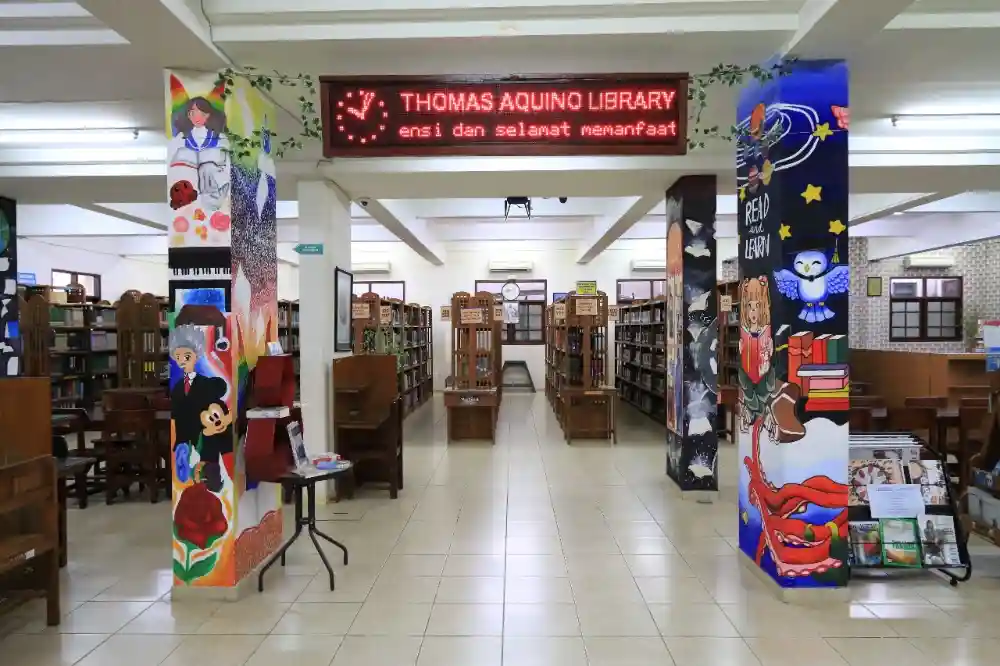
This pressure is evident in some students who frequently catch up on lost sleep during class or seek other distractions. Teachers have different approaches: some assign tasks and then focus on their own matters, while others enthusiastically explain the material before it’s time to practice. A particular example is our physics teacher. Although there’s no less homework, the interaction with the class is truly unique at St. Louis. As an exchange student, I have the same workload and expectations for my academic performance as the other students, which I am especially grateful for. After classes, the school library offers a pleasant study environment. From the extracurriculars mentioned in the last blog post, I also chose Taekwondo and the school’s math club.
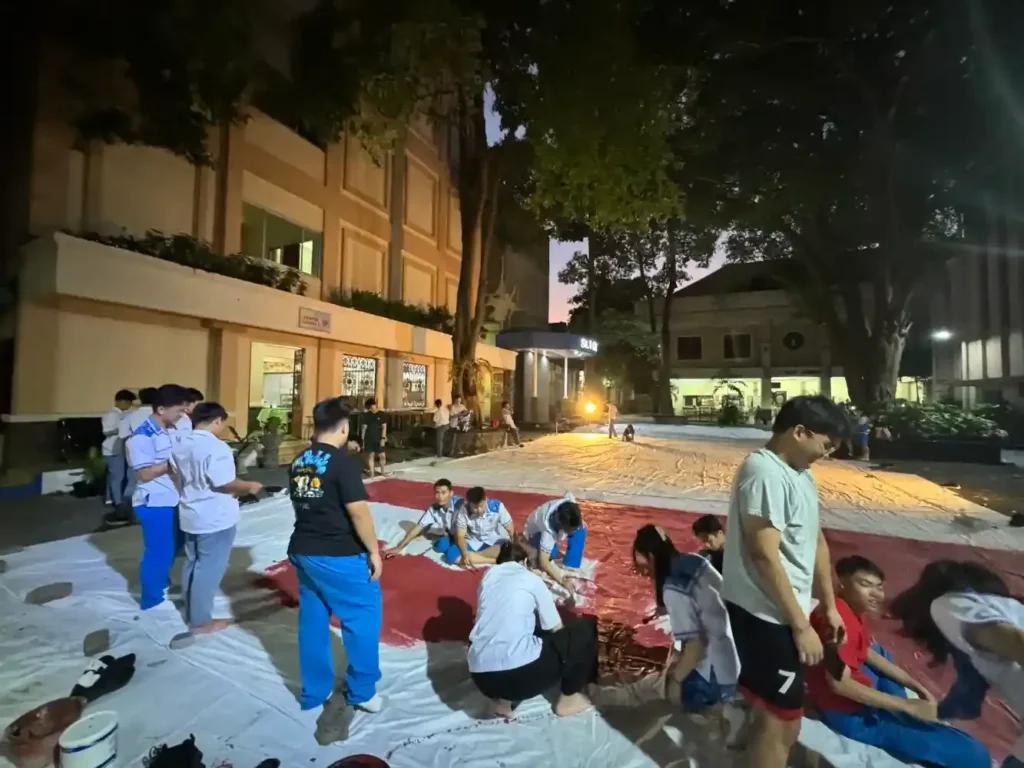
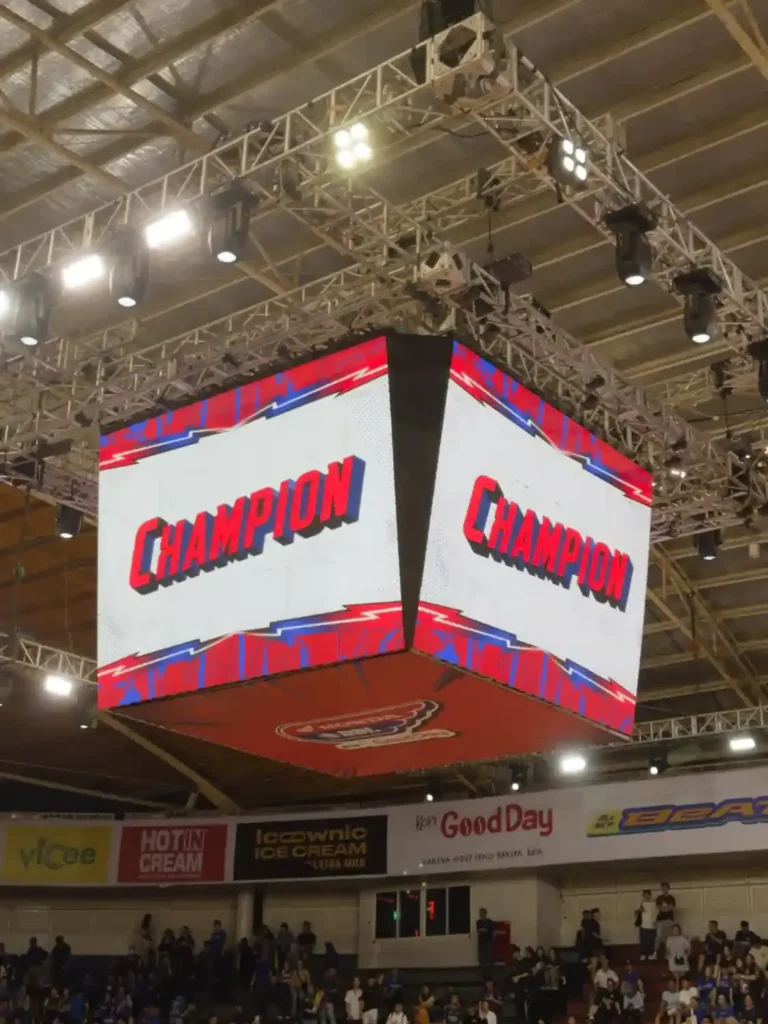
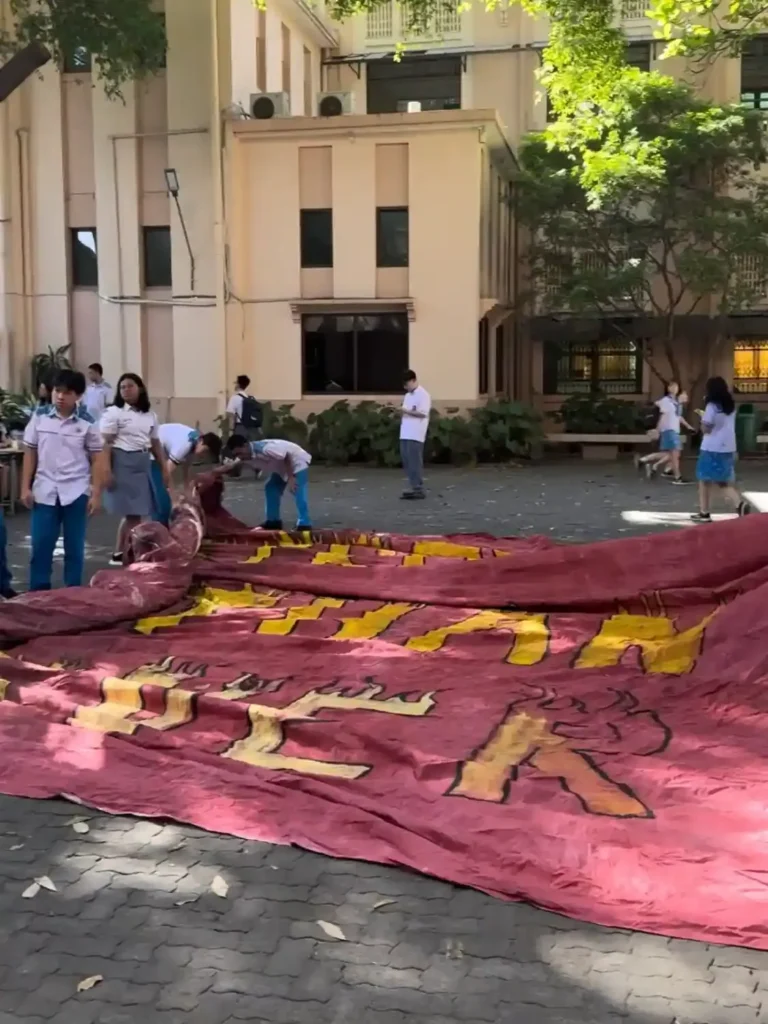
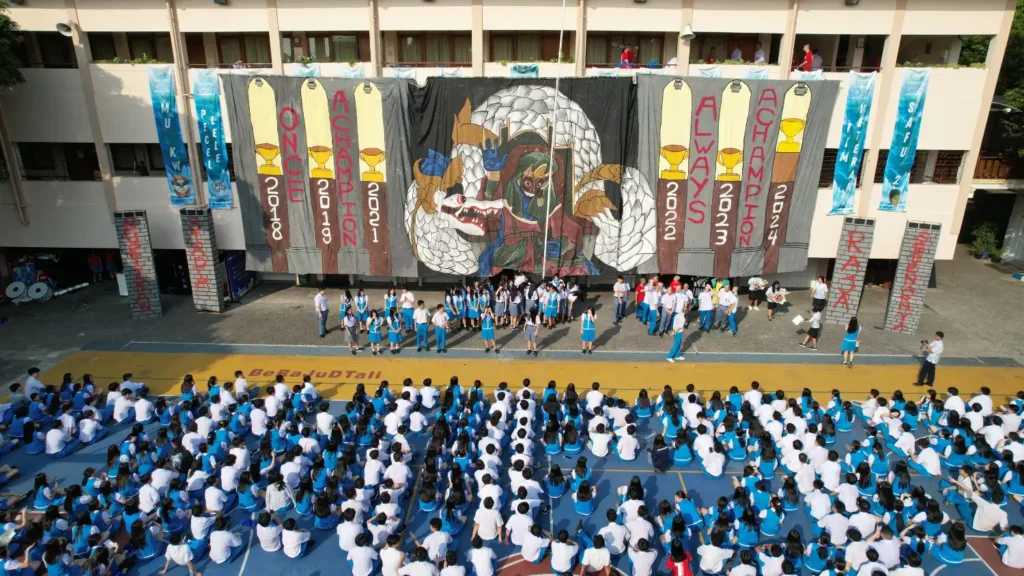
Since school makes up a large part of a teenager’s life in Indonesia, the students’ connection to the school and school-related activities is truly impressive—I have never seen anything like it before. One example is the “Development Basketball League” (DBL), an organization that has grown into a major national event since its founding in 2004, with the aim of promoting the highly popular sport of basketball here. The DBL organizes a league twice a year, in which high school basketball teams compete for titles like the Surabaya Champion and East Java Champion. It’s a big deal, and since St. Louis’ basketball team has been East Java Champion for six consecutive years, there’s a “Supporter Team” alongside the players themselves, which spends the entire year preparing to support their team with rehearsed drumming, support songs, fan choreography, and gigantic banners. All of this is practiced and organized after class by many hundreds of students in the school yards. And the DBL is only one example of the many reasons why St. Louis is open 24 hours a day.
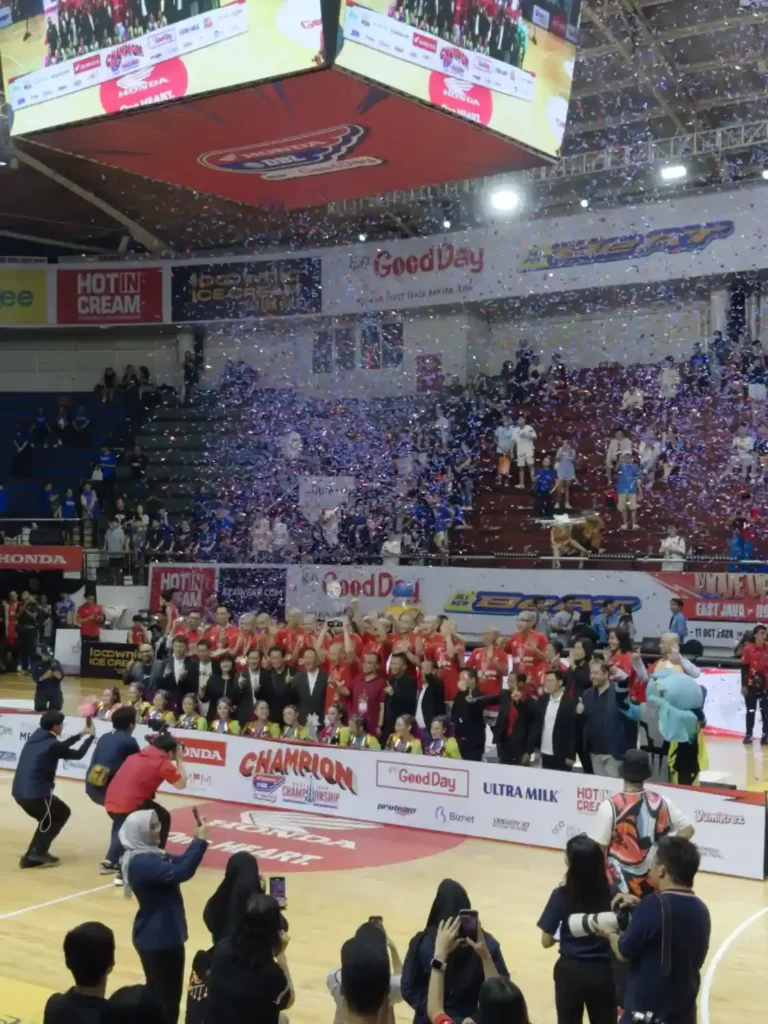
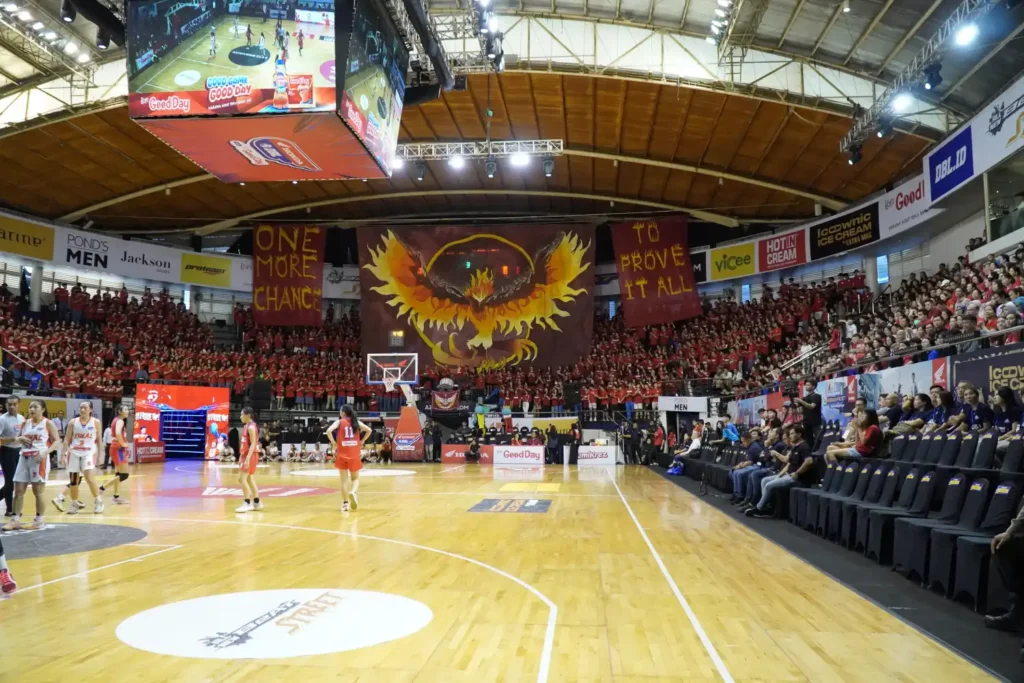
St. Louis’ reputation is reflected not only in its academic rigor but also in the pronounced competitive culture here. This competitive atmosphere permeates almost every aspect of school life, with a strong emphasis on personal achievements, especially academic ones. Competitions for nearly every skill and interest take place in various formats, each with different prizes for the winners. The science Olympiads have especially piqued my interest, but the sports competitions are equally exciting.
About the Language
At the beginning of our stay in Indonesia, each exchange student was expected to have a minimum knowledge of Bahasa Indonesia, which would develop over the year and was supported by a three-month Rotary course. Since my Indonesian was already suitable for daily life, I found an interest in the Mandarin class, which is also part of the curriculum. Indonesian is a grammatically flexible language, with its greatest challenges in learning being the levels of formality and the context-dependent “multifunctional words.” What does that mean?
- Levels of Formality: Just as in German with the difference between “Sie” and “Du,” Indonesian has formal and informal address. In addition to personal pronouns, a large portion of the vocabulary has different words with the same meaning, which are used differently depending on context and formality. For example, the sentences “Tolong, aku mau pesan makanan sehat” and “Tolong, saya mohon ingin memesan makanan yang sehat” are equivalent in meaning, but the first sentence is informal, while the second would be more appropriate in a restaurant. By the way, the meaning is: “I would like to order healthy food, please.”
- Multifunctional Words: Indonesian has no cases, modes, or tenses, which indeed makes it one of the simpler Asian languages. Multifunctional words can have different meanings depending on the context.Here are a few examples of “multi-tool words” in Bahasa Indonesia:
- Jalan: Can mean “road,” “go,” “walk,” or “work.” For example, “Jalan jalan di jalan” means “Walking on the road.”
- Naik: Can mean “rise,” “board,” “increase,” “improve,” “get promoted,” or “gain.” “Naik mobil” means “drive a car,” while “naik pangkat” refers to a promotion.
- Masuk: This word can mean “submit,” “arrive,” “enter,” or “belong.” Figuratively, “masuk akal” means something like “logical” or “understandable.”
On the main island of Java alone, besides the national language, there are about 600 other distinct languages, including widely spoken ones like Javanese and Balinese, both with their own alphabets.
Negative Experiences
While my experiences so far have been mostly positive, I’d like to share some observations on the challenges I’ve noticed in Indonesia. Despite the warmth of the people here, there are societal challenges that reflect general tendencies and can be seen as areas of improvement for the country.
A difference from Germany is evident in the diet: many traditional or popular dishes consist of fried or highly processed foods. The comparatively low prices make fast food and unhealthy foods attractive to parts of the population. Cooking independently doesn’t seem to be taken for granted.
As a developing country with a population of around 280 million (the fourth largest in the world), the infrastructure poses challenges. Sorting facilities and municipal garbage collection are lacking in many places, and waste separation is uncommon. Many people burn their waste or dispose of it in rivers, so both urban and natural environments are often heavily polluted.
Despite these challenges, Indonesia shows a willingness to improve. Environmental protection initiatives are gaining momentum, especially among the younger generation.
Conclusion
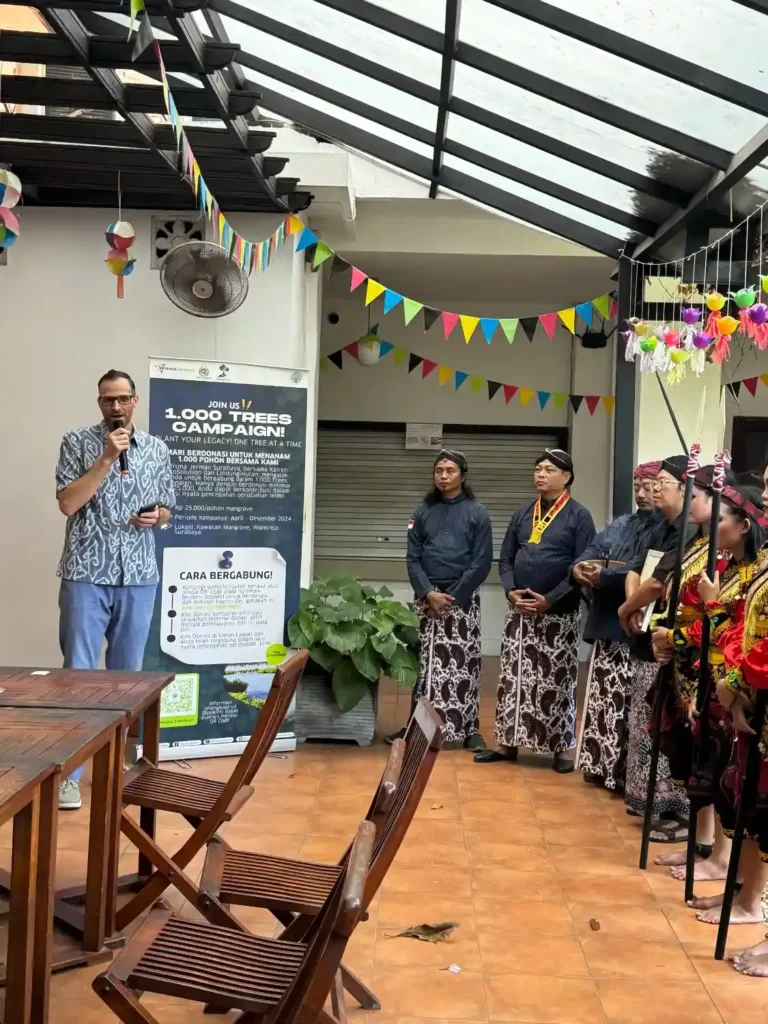
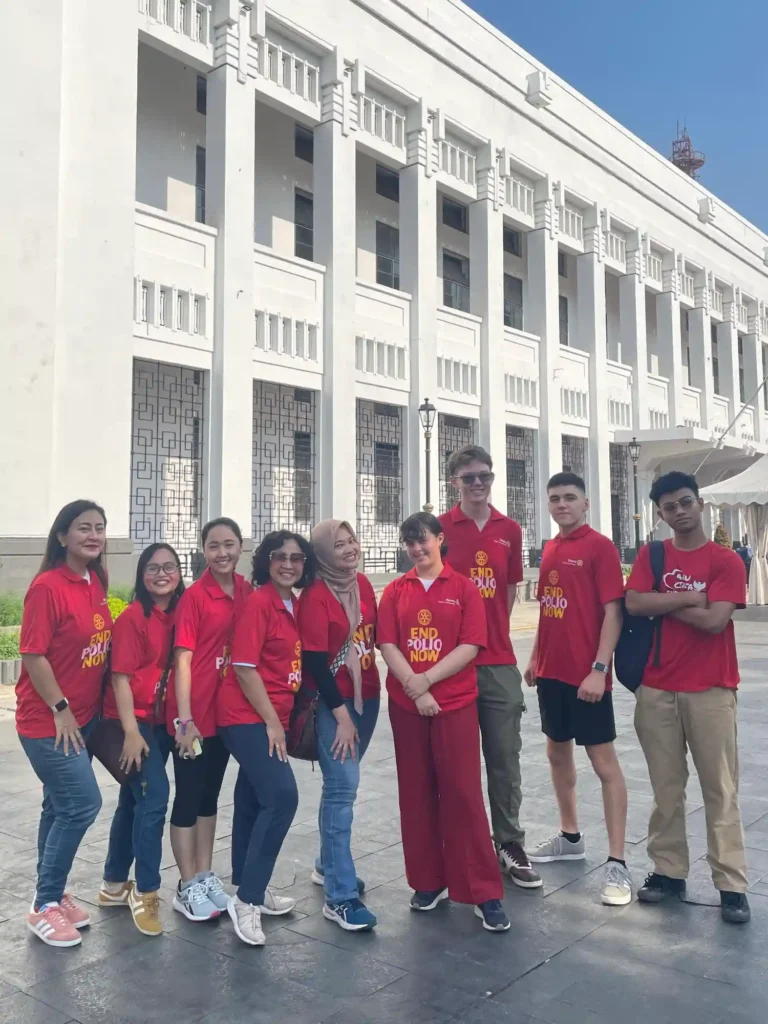
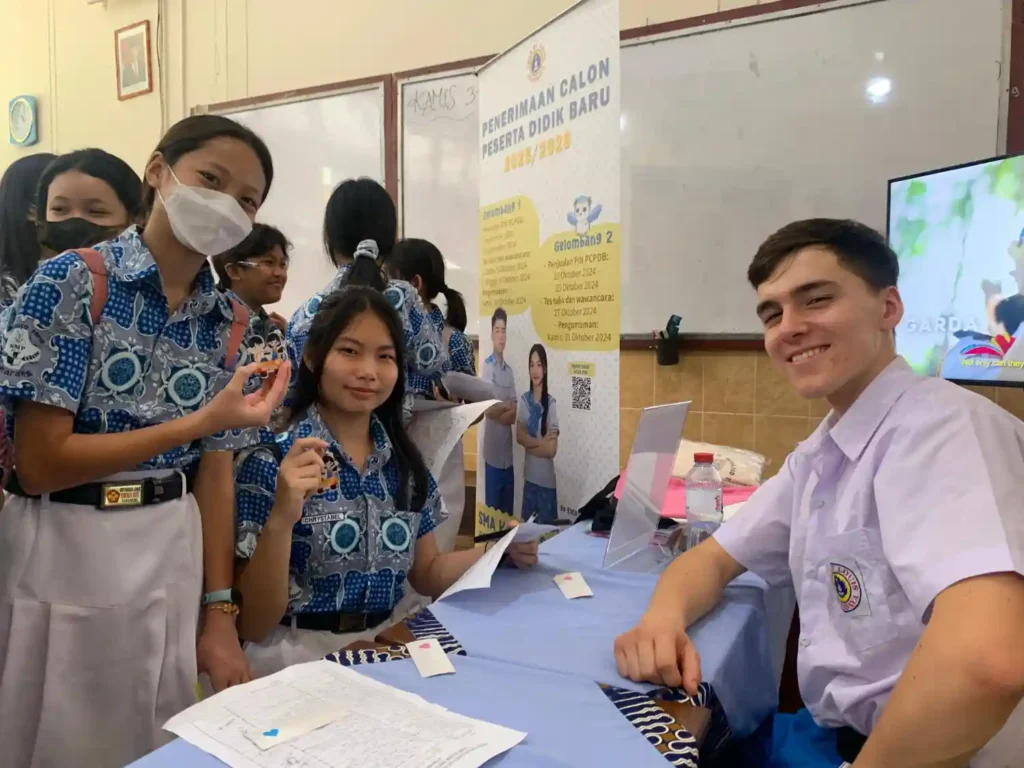
I am grateful for the shared moments I have had with those around me so far. With school representatives, we visited Semarang, a large city in Central Java, to represent St. Louis at a school fair. There are language institutes here, like “Wisma Jerman,” which teach German and even organize Oktoberfest annually. Many competitions in various fields also take place here. The other exchange students share their own experiences when we see each other at the monthly Rotary meetings. A wonderful time.



Thank you for your interest in the journey.
Thank you, Rotary, for this opportunity.
Keep looking up.
Daniel
 English
  Deutsch